

 See My Latest Article on HelloNation
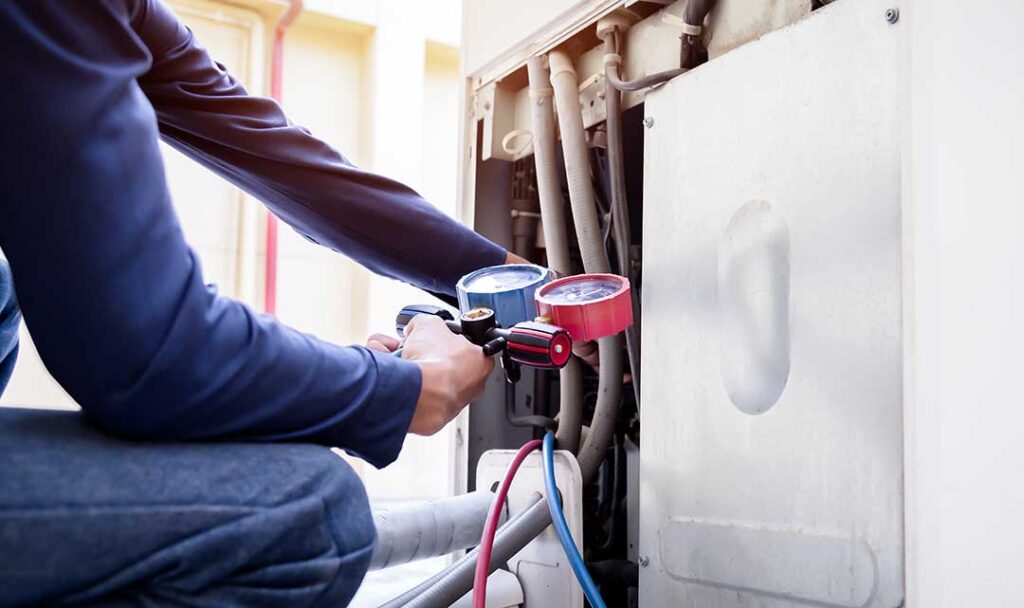
Refrigerant is the chemical that allows an air conditioner or heat pump to move heat from one place to another. It circulates through a sealed system, absorbing heat indoors and releasing it outdoors during cooling.
Although refrigerant is not burned like fuel, it can still affect the environment if it escapes. The environmental impact depends on the type of refrigerant, how much is released, how often leaks occur, and whether the substance is recovered when equipment is repaired or discarded.
Why can HVAC refrigerants affect the environment?
Some refrigerants are powerful greenhouse gases. Their global warming potential, or GWP, compares their climate effect with carbon dioxide. A refrigerant with a GWP of 700 has roughly 700 times the warming effect of the same amount of carbon dioxide over the standard comparison period.
The quantity in a residential system may be relatively small, but a leak can still matter. Repeated leaks, improper disposal, and releases from equipment across millions of homes and buildings add up.
Refrigerants also require energy throughout their life cycle. Environmental effects can occur during:
- Manufacturing and transportation
- Equipment charging and servicing
- Leakage during operation
- Recovery and reclamation
- Disposal of old air conditioners, heat pumps, and refrigerators
The electricity used to operate an HVAC system often creates a larger overall climate impact than the refrigerant itself. However, a leaking system creates both problems: it may use more electricity while also releasing a greenhouse gas.
Do all refrigerants damage the ozone layer?
No. Ozone depletion and global warming are related but different environmental concerns.
Older chlorofluorocarbons, or CFCs, damaged the stratospheric ozone layer and were phased out in the United States. Hydrochlorofluorocarbons, including R-22, were developed as transitional replacements, but they still have ozone-depleting effects and high climate impacts.
Hydrofluorocarbons, or HFCs, do not deplete the ozone layer, but many have high global warming potential. This distinction explains why replacing an ozone-damaging refrigerant with an HFC solved one environmental problem without completely solving the broader climate problem.
Newer refrigerants may have much lower GWP. Some are classified as mildly flammable, which means equipment must be designed, installed, serviced, and labeled for that refrigerant. A lower climate impact does not mean a substance is harmless or suitable for every HVAC system.
What refrigerants are common in homes?
The refrigerant depends largely on the age and type of equipment.
Older air conditioners and heat pumps may use R-22. Newer systems commonly use R-410A, although equipment standards and available refrigerants are changing. New systems are increasingly designed around lower-GWP options, including certain mildly flammable refrigerant blends.
The refrigerant name is usually printed on a label attached to the outdoor unit or indoor equipment. It should not be guessed from the system’s age or appearance.
Refrigerants are not interchangeable. Adding a different substance to an existing system can damage components, create unsafe operating conditions, reduce efficiency, and violate equipment requirements. “Topping off” a system without addressing a leak also releases more refrigerant over time and does not correct the underlying problem.
What happens when an HVAC system leaks?
A leak can cause several environmental and household effects at once.
First, refrigerant may escape into the atmosphere. Second, the system may run longer while delivering less cooling. During Lexington’s long, hot, humid cooling season, that can increase electricity use and place additional strain on compressors and fans.
Common warning signs include:
- Cooling that has gradually become weaker
- Longer or nearly continuous run times
- Ice on refrigerant lines or indoor coils
- Hissing or bubbling sounds near components
- Repeated need for refrigerant additions
- Unusually high summer electricity use without another clear explanation
Ice does not prove that refrigerant is leaking. Restricted airflow, a dirty filter, or other mechanical problems can also cause a coil to freeze. Diagnosis requires checking the complete system rather than assuming that more refrigerant is the answer.
Is it better to repair an older system or replace it?
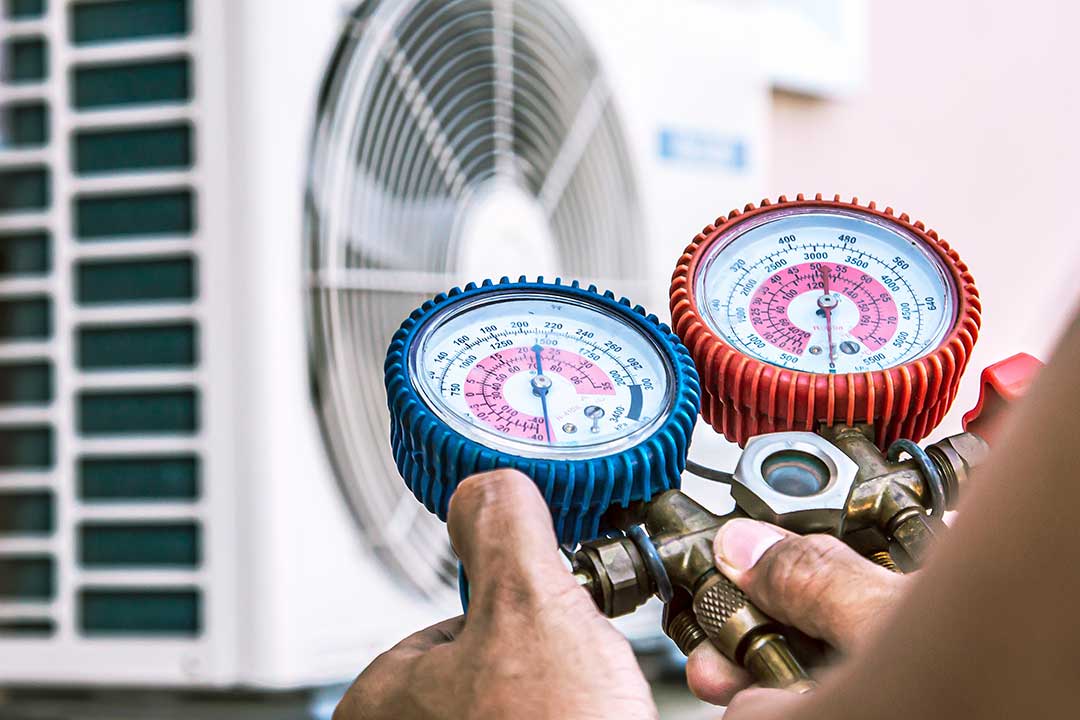
There is no universal environmental answer. Repairing an existing system can avoid the manufacturing, transportation, and disposal impacts associated with replacement. A well-maintained older unit may continue operating efficiently for years.
Replacement may make more sense when a system has repeated leaks, major corrosion, poor efficiency, or a damaged heat exchanger or compressor. A newer system may use a lower-GWP refrigerant and less electricity, but manufacturing and installing new equipment also require materials and energy.
The most environmentally responsible decision usually considers:
- The refrigerant type and the size of the charge
- Whether the leak can be permanently repaired
- The system’s efficiency and operating condition
- Expected remaining service life
- Availability of compatible refrigerant and components
- The environmental impact of manufacturing replacement equipment
Federal refrigerant rules generally allow existing systems to be repaired during their useful life, even as restrictions apply to certain new equipment. Requirements can include product-specific exceptions and changing compliance dates, so the refrigerant label and equipment specifications matter.
How should refrigerant be handled during service?
Refrigerant should never be intentionally released. Federal Clean Air Act requirements prohibit intentional venting of covered refrigerants during service, repair, maintenance, or disposal.
Work that could open the refrigerant circuit requires appropriate recovery equipment and EPA Section 608 certification. Recovered refrigerant may be reused in certain circumstances, recycled, or sent to an approved reclaimer. It should not be poured out, burned, placed in a trash container, or released by cutting a line.
This is not a do-it-yourself task. Refrigerant circuits can contain high pressure, and some newer refrigerants have additional flammability requirements. A qualified, properly certified technician is appropriate when a system has a suspected leak, needs charging, or is being dismantled.
What should happen to an old air conditioner?
An old outdoor unit, heat pump, window unit, refrigerator, or dehumidifier should not be placed at the curb or sent to scrap while still containing refrigerant.
Before final disposal, the refrigerant must be recovered using suitable equipment. The appliance can then enter an appropriate recycling or disposal process. Cutting refrigerant lines or crushing the equipment does not count as responsible disposal and may release the remaining charge.
For area households, the practical step is to ask the disposal or recycling program how it handles refrigerant-containing equipment before transporting the appliance. Keep any documentation showing that the refrigerant was properly recovered if a disposal facility requires it.
Does routine maintenance reduce environmental impact?
Yes, maintenance can reduce both direct emissions and unnecessary electricity use.
Keeping filters reasonably clean, maintaining unobstructed outdoor airflow, and addressing unusual system behavior early can help equipment operate as designed. Maintenance does not eliminate the possibility of a refrigerant leak, but it may reduce the chance that a small performance problem becomes a long-running, inefficient condition.
The strongest environmental practices are straightforward: prevent leaks where possible, recover refrigerant during repairs and disposal, avoid mixing refrigerants, and consider total life-cycle impact rather than focusing only on the name printed on the equipment label.