

 See My Latest Article on HelloNation
Why insulation matters for HVAC performance
Insulation slows the movement of heat through a home’s ceilings, walls, floors, and ductwork. By reducing unwanted heat gain in summer and heat loss in winter, it helps the heating and cooling system maintain indoor temperatures with less run time.
That matters in Lexington, SC, where homes may face long, hot, humid summers along with heating demands during cooler winter weather. An underinsulated attic can become extremely hot, transferring heat into rooms below. In winter, the same area may allow valuable indoor heat to escape.
Insulation does not make an HVAC system more powerful. Instead, it reduces the amount of work the system must do.
How does insulation improve energy efficiency?
A properly insulated home loses and gains heat more slowly. This allows the HVAC system to reach the thermostat setting and remain off for longer periods.
For example, an air conditioner in a home with poor attic insulation may run repeatedly during a hot afternoon because heat continues entering through the ceiling. With adequate insulation and air sealing, the indoor temperature is more stable, so the system can cycle normally rather than running for extended periods.
The same principle applies to heating. If warm air escapes through the attic, crawl space, recessed lights, or gaps around plumbing and wiring, the furnace or heat pump must replace that lost heat.
Potential benefits include:
- More consistent room temperatures
- Fewer long operating cycles
- Lower heating and cooling demand
- Reduced strain on HVAC components
- Less temperature difference between upper and lower floors
- Improved comfort near ceilings, exterior walls, and floors
Energy savings vary widely. The results depend on the home’s age, construction, insulation levels, air leakage, duct condition, thermostat settings, and equipment efficiency.
Is attic insulation the most important area?
For many homes, the attic is one of the highest-priority locations because heat rises and the roof is exposed to direct summer sun. Inadequate attic insulation can allow heat to move through the ceiling and can also affect ductwork located in the attic.
Before adding insulation, air leaks should be addressed. Common leakage points include:
- Attic access panels
- Plumbing and electrical penetrations
- Recessed light openings
- Top plates between walls and the attic
- Duct penetrations
- Gaps around chimneys or flues
- Openings around bathroom exhaust fans
Insulation slows heat transfer, but it does not reliably stop moving air. If warm, humid outdoor air enters through gaps, adding insulation alone may not solve comfort or moisture problems.
Attic ventilation also needs to remain functional. Insulation should not block soffit vents or other designed airflow paths unless the attic assembly has been intentionally changed to a different system.
What about ducts in an attic or crawl space?
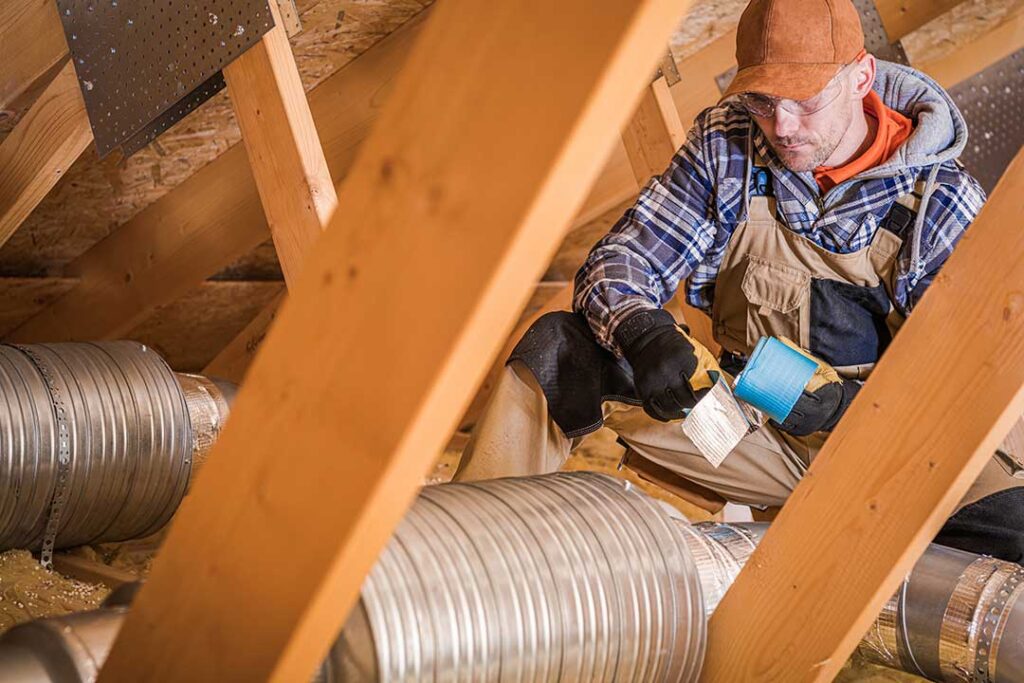
Insulating the building envelope helps, but duct insulation protects the air after it leaves the HVAC equipment.
Ducts located in an unconditioned attic or crawl space can gain heat during summer and lose heat during winter. Leaky ducts create an additional problem by allowing conditioned air to escape before it reaches the rooms.
Duct improvements generally involve two separate steps:
1. Sealing joints, connections, and damaged areas to reduce air leakage.
2. Insulating the duct surface to slow heat transfer.
Duct insulation is most useful when it is continuous, dry, and properly secured. Wet or compressed insulation performs poorly. Ducts should also be supported so that insulation does not sag or separate over time.
A system may appear to run normally while delivering less heating or cooling to the living space because of duct leakage or heat gain in an attic.
Does wall insulation affect indoor comfort?
Yes. Wall insulation reduces heat transfer through exterior walls and can make rooms feel less affected by outdoor conditions. It is especially helpful in rooms with large exterior wall areas, limited shade, or noticeable temperature swings.
However, wall insulation is not always the first improvement to make. In an older home, attic air sealing, attic insulation, duct repairs, and crawl-space improvements may provide more noticeable results because those areas often have larger air leaks or greater exposure to outdoor temperatures.
Adding insulation to finished walls can also be complicated. The work may require opening wall surfaces or using specialized installation methods, and poorly managed moisture can create long-term problems.
Can insulation help control humidity?
Insulation can support humidity control, but it does not remove moisture from indoor air. The air conditioner performs that task as it cools the home, while ventilation and air sealing influence how much outdoor moisture enters.
In a humid summer climate, uncontrolled air leakage can bring damp outdoor air into attics, crawl spaces, wall cavities, and living areas. This may contribute to musty odors, condensation, or biological growth if surfaces remain damp.
A balanced approach includes:
- Sealing major air leaks
- Installing insulation without leaving gaps or compressed areas
- Keeping ducts dry and sealed
- Maintaining appropriate attic or crawl-space ventilation
- Managing plumbing and roof leaks promptly
- Ensuring the HVAC system is sized and operating correctly
Insulation should never be used to cover an active moisture problem. Water intrusion must be corrected before insulation is installed or replaced.
What does the R-value mean?
R-value measures resistance to heat flow. A higher R-value generally means greater resistance, but the number alone does not guarantee good performance.
Installation quality matters because gaps, thin spots, compression, and exposed framing can create weak points. For example, a well-insulated attic with uncovered access panels or major air leaks may perform worse than expected.
The appropriate insulation level depends on the climate, location in the building, construction type, and applicable building standards. Attics generally need more insulation than walls because they experience greater temperature differences and have more available space for insulation depth.
Different materials also have different characteristics. Fiberglass, cellulose, rigid board, and spray-applied products can all be used in appropriate applications, but each requires proper installation and moisture planning.
What signs suggest a home needs more insulation?
Residents may notice insulation-related problems without seeing the insulation directly. Common signs include:
- Rooms that are consistently hotter or colder than the rest of the home
- An HVAC system that runs for unusually long periods
- High temperatures in upper-floor rooms
- Drafts near attic access points or exterior walls
- Floors over crawl spaces that feel unusually cold
- Large temperature changes after the system shuts off
- Ice-cold or hot duct surfaces in unconditioned spaces
- High energy use that does not match thermostat settings or household habits
These signs can also result from dirty filters, blocked registers, refrigerant problems, damaged ductwork, poor airflow, or an aging HVAC system. Insulation is one part of the building envelope, so a complete diagnosis should consider the home as a system.
What should be checked before adding insulation?
A basic inspection should look for moisture, air leakage, existing insulation depth, duct condition, and electrical or combustion safety concerns.
Air sealing is typically completed before new attic insulation is added. Attic insulation should not cover unsafe wiring, recessed fixtures that are not rated for contact with insulation, or equipment that requires specific clearances.
If fuel-burning equipment is located in or near the attic, crawl space, or other enclosed area, changes to air sealing can affect combustion airflow. That situation requires safety testing by a qualified technician before and after the work.
The most effective result usually comes from treating insulation, air sealing, ducts, moisture control, and HVAC operation as connected parts of one system. Improving only one area may help, but coordinating the improvements is more likely to produce stable temperatures and efficient equipment operation.